

III. MISSIONE
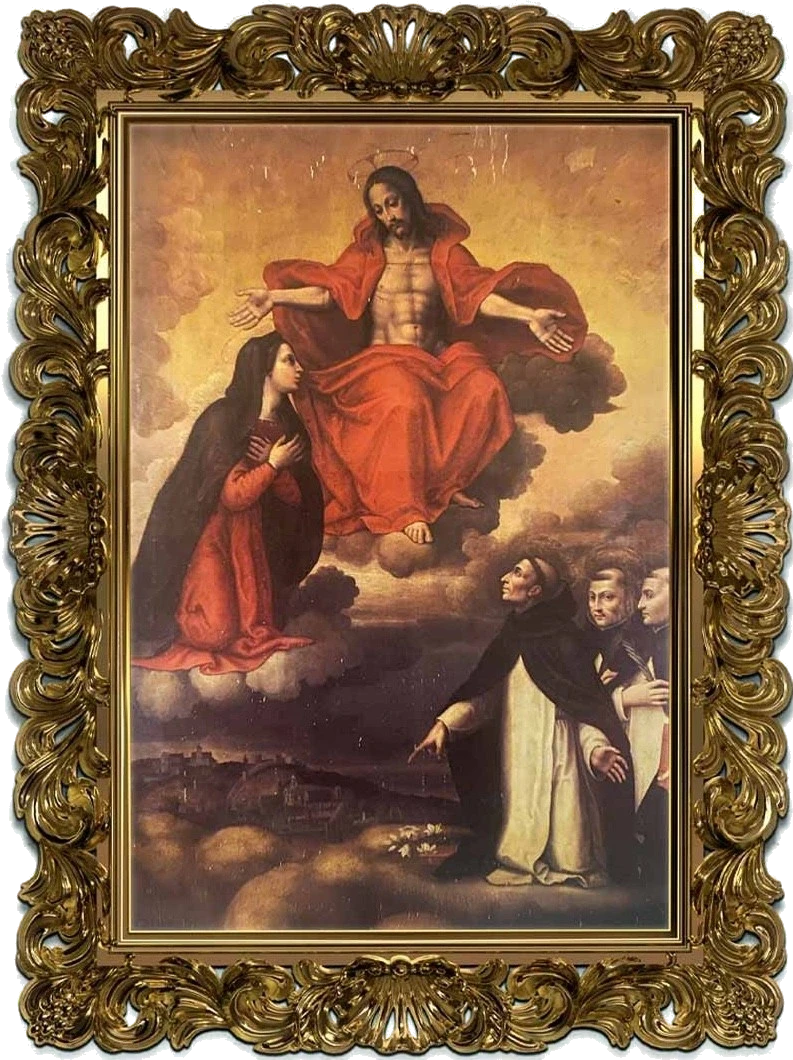
Fig. I, Fra Paolino da Pistoia (1490–1547), Fra Girolamo Savonarola and His Martyred Companions. Panel. Convent of San Domenico di Fiesole.
E qui non posso finire senza esprimere un vivissimo desiderio: Quando potremo vedere un’edizione completa di tutte le Opere di questo grande Predicatore? Questa sarebbe la più efficace delle difese, sarebbe un trionfo della scienza e della religione, il più grande e più proficuo ricordo del prossimo Centenario!
Domenico da Pescia nella mestissima lettera che scriveva ai suoi Frati di San Domenico di Fiesole, la sera innanzi il supplizio, raccomandava ad essi le Opere del loro Padre e Maestro! Il testamento del fedele compagno nella vita e nella morte del Savonarola sia uno stimolo ai figli della Congregazione di San Marco per appagare il comune desiderio!
Paolo Luotto, Prefazione a Il vero Savonarola e il Savonarola di L. Pastor, 2ª ed. (Firenze 1900), p. VIII.
Fate raccorre dalla cella nostra tutti gli opuscoli del P. F. Girolamo, & fateli legare & metterne una copia in libbreria, & un altra in refettorio per leggere a mensa, pur con la catena, acciò anco i Fratelli conversi possano quivi qualche volta leggerli.
Fra Domenico da Pescia, Lettera ai frati di San Domenico di Fiesole (1498), in Pseudo-Burlamacchi, Vita del P. F. Girolamo Savonarola (Lucca 1764), pp. 155–156.
Girolamo Savonarola, born in 1452 in Ferrara, embraced a life of piety and renunciation from an early age. Strong disgust for the moral decay of society and the Renaissance corruption of the Church partially inspired his decision to enter religious life and he left his family home to join the Dominican Order in the sacred convent of San Domenico in Bologna. Years later, having been sent to the convent of San Marco in Florence, his example and word would strike at the very heart of the pagan Renaissance.
Excommunicated by Pope Alexander VI in 1497 amid fabricated charges and later arrested by Florentine authorities, Savonarola was executed in 1498; he was hanged, his body was burned, and his ashes collected and scattered into the Arno River to prevent veneration. His legacy endured, inspiring later saints and reformers who regarded him as a faithful and courageous son of the Dominican Order and the Catholic Church, symbolizing her enduring sanctity and vocation as the Mother of Saints, so much so that we may apply to Savonarola those words sung by Dante about St. Dominic:
Then he, with both his learning and his zeal,
and with his apostolic office, like
a torrent hurtled from a mountain source,
coursed, and his impetus, with greatest force,
struck where the thickets of the heretics
offered the most resistance. And from him
there sprang the streams with which the catholic
garden has found abundant watering,
so that its saplings have more life, more green.
Dante Alighieri, Paradiso XII, 97–105, tr. Allen Mandelbaum (Berkeley 1984).

[1] Title page of Savonarola’s Compendio di revelatione (Florence, 1496), with a woodcut of Fra Girolamo preaching to a crowded church. Houghton Library, Harvard University.

Through the centuries, much has been written in defense of Fra Girolamo, and the consensus among Catholics—principally in Italy—holds him as one of the Church’s greatest sons, a preacher of rare efficacy, and a sure guide for those who seek to advance in the spiritual life. One of the greatest triumphs in this effort was the compilation and publication of the Edizione Nazionale of Savonarola’s opera omnia, carried out in the 20th century by eminent Italians, and directed by Venerable Giorgio La Pira, the “Holy Mayor of Florence.” We believe, therefore, in continuation of this pious endeavor, that by making his works more widely available and accessible, transcribing them from the Edizione Nazionale, translating them into English and other languages, and republishing important scholarly studies, his potent and efficacious voice will reach unto the ends of the earth.
In every age there will be sons of Savonarola who dedicate themselves to defending his legacy. Since the turn of the 15th century, not a generation has gone by that has not seen men and women, distinguished for their learning and sanctity, who have had Fra Girolamo as their Father and Master. We follow in the footsteps of St. Philip Neri, St. Catherine de’ Ricci, St. Pier Giorgio Frassati (to name but a few!) who venerated him, Botticelli and Michelangelo who listened to him, and Raffaello, Fra Bartolomeo, and Santi di Tito who painted him in sacred art.

[2] Egisto Sarri (1837–1901), Savonarola Explaining the Apocalypse in the Cloister of San Marco. Oil on canvas. Private collection.

Fig. III, attributed to Filippo Dolciati, The Execution of Savonarola in the Piazza della Signoria, c. 1498. Museo di San Marco, Florence.
Savonarola lives on in his words, and even more so in the hearts of his brethren and spiritual children. We hold him as one of the most splendid glories of the so-decorated Order of Preachers: A new Dominic in his love for God and austerity of life, a new Peter Martyr in his destruction of error and in the shedding of his blood, a new Thomas in his angelic purity, a new Catherine in his unceasing prayer and defense of the Apostolic See, a new Vincent in his preaching, a new Antoninus in his pastoral tenderness.
He poured out the entirety of his soul into his sermons and writings. He gave his whole self to Florence as a bridegroom to a bride. His was a love that burst forth like an uncontrollable blaze to the benefit of the entire Body of Christ, which was so afflicted by the assaults of the devil and his members. He followed the doctrine of Christ crucified, who for the honor of the Father and for our salvation, gave his life for his sheep and ran as if drunken with love to the opprobrious death on the cross.
In conclusion, we again take Professor Luotto’s words as our own: “May this testament of Savonarola’s faithful companion in life and in death be a spur to the sons of the Congregation of San Marco to fulfill our common desire!” This common desire—to see our Father and Master’s teachings and example endure—is what animates our labor.

[3] Tito Lessi (1858–1917), Girolamo Savonarola and the Envoys of Lorenzo de’ Medici. Oil on canvas. Private collection.